Chicago Jam Scene Has Moved to Soundfuse Online Magazine
Circa 2011
This was the official website of the Chicago Jam Scene until March 2012.
Content below is from the site's 2011 archived pages.
~~~
NEWS
All of our content is now at Soundfuse Online Magazine. This website will expire in March. Please head over to www.soundfusemag.com for all same coverage you loved on CJS and much more.
Chicago Jam Scene has moved to Soundfuse Online Magazine
Happy New Year everyone! Welcome to 2012!!
The time has come for a change. After 29 months as Chicago Jam Scene, it had become apparent that we had completely outgrown our name. As we expanded well beyond the jam scene, and even Chicago for that matter, it was time we created a new website to accommodate our expansion. As of this post, nothing new will be published at this site, all of our content will now be published exclusively at the new site.
Enter Soundfuse Online Magazine (www.soundfusemag.com). With the new website we will still focus largely on live music reviews, photography, and video. But now we will also have a greater emphasis on show previews/promotions, album reviews, contests, and commentary on music & culture. Essentially, everything we do outside of show reviews is going to receive a lot more attention. Multiple daily posts will be common, especially since we will now have a dedicated photography page, where concert photos will be available with in one week of the show. Soundfuse is going to a much more up-to-date and user friendly music website than CJS ever was.
Since Chicago has America's best live music scene, we will continue to be based here and highlight all of the amazing music this city has to offer. However, we will also be expanding our territory, with contributions coming from a wider range of Midwestern locations and more summer festival coverage as well. We have big plans for Soundfuse Online Magazine and we're happy to have all of your support. 2012 is going to be a great year!
POSTS
11.25.11 | Nicolas Jaar
Words by Zlatko
Photos by David Goldman
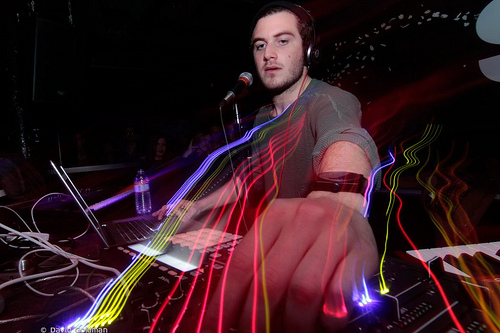
To say Nicolas Jaar had a good year would be a massive understatement. Compared to where he stood one year ago, it was a wildly successful 2011 campaign. The twenty-one year old Brown University student topped Resident Advisor's Top 20 Albums and Top 20 Live Acts earlier this month, not something many other kids his age can say they have accomplished. Hell, there are men twice his age that do not get that kind of recognition. Having had the pleasure of seeing him on my birthday this past March with Orchard Lounge, I really looked forward to his return to Smart Bar on Black Friday. After becoming more familiar with his music and really getting into his album Space Is Only Noise throughout the year, I was even more excited for this show than I was for the one back in March. Jaar even released a new track several weeks before this show called Don't Break My Love" that is in my humble opinion, one of the finest of 2011. This show only solidified RA's notion that he is one of the premier live acts going in the electronic music scene these days.
11.26.11 | Umphrey's McGee, Cornmeal
Words, Photos & Videos by Frazier

Night one of Umphrey's McGee's Thanksgiving run at Aragon Ballroom was a solid show. The first set's unexpected cover of "Burning Down The House" lit a fire under the room. And the second set's "Triple Wide" was one of the best versions I've heard of that song in a while-- that "Smooth Criminal" jam was money in the bank. Yet, I felt like there was a lot of room to improve, especially considering the Chicago Mass Choir was going to make an appearance. Where there wasn't room to improve, however, was in the sound quality department. Remember how I bashed Widespread Panic for having the worst sound in Aragon? Well, UM's sound engineer, Chris Mitchell, had them at the opposite end of the spectrum; the sound was as dialed in as possible within the limitations of the venue. The conditions were right, and with the people packed in tighter than the previous night, Umphrey's came out and played a gem of a concert.
Best Live Performances of 2011
Words & Photos (unless otherwise noted) by Frazier
I wanted this list to be a top ten. And then a top 11 for 2011. And then 2011's Top Dozen. And then it was the Baker's Dozen. And then... Then it was at that point when I decided to stop limiting myself to some arbitrary number. Essentially I shook up all the shows in my memory from the past year and let them settle naturally into layers. The shows below are the top layer: the most powerful music experiences of the year. This is in no way meant to be an objective ranking of bands/artists, it's just what I feel impressed me the most over the year. And keep in mind that the difference between number three and, say, number eight really isn't all that much. Any show that's on this list was incredible.
14. A-Trak at The Mid on 5.5.11
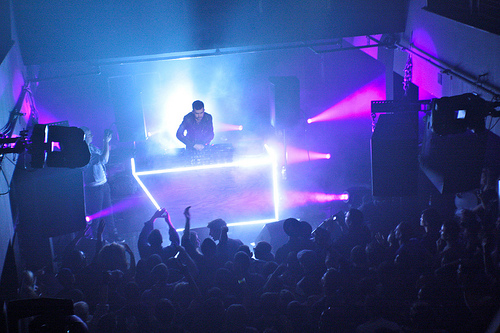
Definitely the most skilled DJ I've ever seen perform. Completely ambidextrous scratching. Lightning speed. Effortlessly flawless transitions. I challenge anyone who believes that DJs aren't musicians to watch this guy and say with a straight face & a clear conscience that A-Trak isn't a musician. Because it's impossible.
11.25.11 | Henhouse Prowlers
Words & Photos by Sean Petykowski
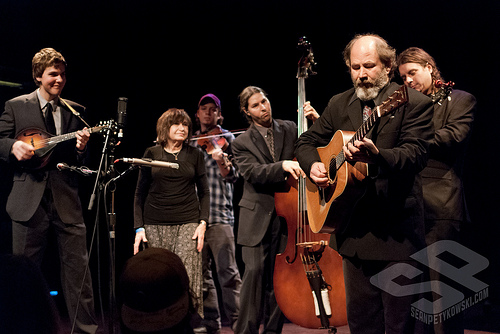
Growing up in southern Texas, blues, Tejano and country were sounds I frequently heard switching through radio stations or when listening to my parents music as we drove down Highway 48 in my father’s third generation Chevy Bronco on our way to South Padre Island. I’ve looked at the liner notes to Eric Clapton's’ Unplugged album so many times that I could recall every word, lyric and image that graced each page. This past Thanksgiving after sharing an incredible meal with the family that had introduced me to such great music I made my way to a benefit concert to support the Greater Chicago Food Depository at Mayne Stage. With my can of food in hand I made my way inside the venue and quickly grabbed a seat to watch Henhouse Prowlers and Chicago Farmer thrum the night away.
Best Guitarists of 2011
Words & Photos (unless otherwise noted) by Frazier
Since Zlatko is dropping a ton of electronic knowledge in his year-end lists, I figured I needed to really represent the instrumental talent I saw in 2011. I couldn't rank the bands but ranking the guitarists makes a little more sense, if only to emphasize just how mind-blowing number one was to hear. The order was determined by a combination of guitar skills and repeated incidences of amazement, which, once again, indicates that number one on this list was basically in a world of his own. (And before you get in a tizzy, yes, I recognize the pure genius of both Trey Anastasio and Jimmy Herring. But these guys could be at the top of this list every year and I'm trying to mix things up.)
6. Fareed Haque

No list of amazing guitarists that comes out of Chicago would be complete without Fareed Haque. He is a jazz guitar wizard and made over a dozen appearances in the city in 2011. I made sure to send as many different writers as I could to cover Fareed this year and the response across the board was indentical: "WHOA." If his activity in 2011 is any indication of his 2012, expect to see him pop up all over the city in a variety of groups, with his main focus being the blossoming electro-jazz group MathGames.
Favorite Albums of 2011
Words & Photo by Zlatko
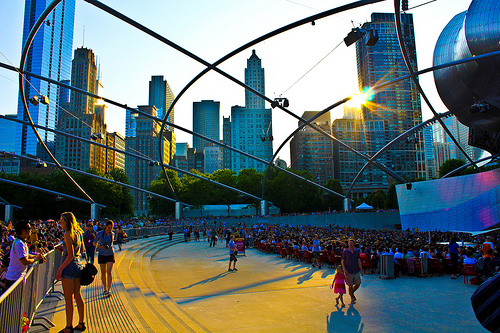
What an incredible year of music to reflect back on, 2011 was truly a special one. The overall landscape seemed to shift in a new direction and electronic music continued to expand and grow, even reaching popular culture and attaining mainstream credibility (is that an oxymoron?). Compared to my 2010 List, I found myself listening to more electronic music than ever this year. It may have been my tastes shifting, or the amount of talent and depth in the genre, but I constantly found great albums within that sphere. Some of the albums on this list I discovered myself, others I was given recommendations by fellow audiophiles. I know I did not hear every great album that came out this year but I feel like I came across many of them. If you have any recommendations, please send them my way!
This list is in alphabetical order, I chose to not rank these albums sequentially for this simple fact: music is art and art is subjective. Every work of art should be judged on its own merits and stand alone from another unique piece of art. I can't find a way to say James Blake's album was any better than Martyn's or that what The Field did was any better than what Tycho did. I listened to each of those artists because they evoked different reactions and sensations inside my mind. That being said, I present to you my favorite music from this year...
11.25.11 | Umphrey's McGee, Beats Antique
Words by Brianna Kelly
Photos & Videos by Frazier

The only thing that got me through a 10-hour shift at America’s biggest—and greediest—department store on Black Friday was my favorite band…and 40 mg of Adderall. I had the displeasure of experiencing retail hell at 4 a.m. to sell clothing to plus-sized ladies like a corporate zombie, while simultaneously counting down the hours until Umphrey’s McGee took the stage at the Aragon Ballroom to play two back-to-back shows. I was so hyped for these Thanksgiving shows, it was all I could think or talk about all day; even though my fellow associates at Macy’s initially thought Umphrey’s McGee was some type of rare disease.
Best Midwestern Bands in 2011
Keeping with our year-end tradition of laying kudos on some deserving bands, I present to you a list of the best groups who called the Midwest home in 2011. It wouldn't be fair to rank these bands considering I love them all, so this list is in no order at all. These bands all made a huge impact on me in 2011 and I expect them to have huge 2012s.
Strange Arrangement

These guys were on the list last year and I suspect that this will be the last time they'll be eligible-- they will be hitting the national circuit very soon. These guys have matured tremendously in 2011, cultivating a complex & well-developed jam-rock sound that gets dancey as well as it rocks. With no genre holding them down and an uncanny ability to cover just about anything, Strange Arrangement isn't long for the Midwest.
11.23.11 | Van Ghost
Words, Photos & Videos by Frazier

It's one thing when a band grows and matures before your eyes. Any band worth its salt will come together over time, strengthening their chemistry while getting tighter and more polished-- that's what happens with talented & passionate individuals becoming a cohesive unit over time. But it's another thing altogether when a band undergoes a true metamorphosis, literally transforming from a solid group to an absolute powerhouse. Yet, Van Ghost has done this very thing. Over the past 18 months, this band has morphed from an easygoing, alt-country outfit to a free-wheeling jam-funk-rock animal, capable of delivering explosive material in a wide variety of genre fusions. VG is a band I saw a number of times in 2011; there were some ups and downs but the overall trajectory was pointed directly at the sky. Then there was this show, a Black Wednesday celebration at Schuba's where everyone was invited to dress in all black & white. It was already a special night by design, and then the level of raw energy & musical precision went and pushed it to another level. Twenty-eleven was a crucial chapter in the evolution of Van Ghost and this show handed Chicago a massive exclamation point to plant at the end.
11.18.11 | MiM0SA
Words & Photos by Sean Petykowski
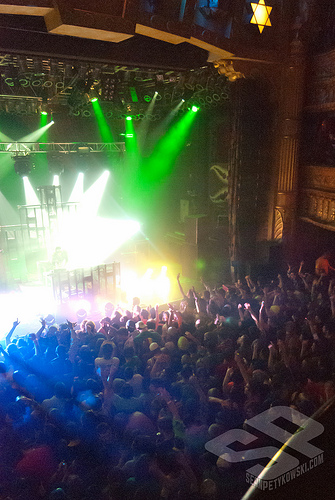
Mix 1 from Mimosa at The House of Blues on November 18, 2011 by Sean Michael Petykowski
Mix 2 from Mimosa at The House of Blues on November 18, 2011 by Sean Michael Petykowski
It was approaching midnight as I entered the House of Blues to be a part of what would be one of the most out-of-control shows I had seen all year. The wonderful team at Silver Wrapper put together a chaotic night filled with dubstep, electro and post-dub by DJs MiMOSA, The M Machine and Sleepyhead. From the start I knew that this was going to be a unique experience based solely off the ridiculous stories I had read from the countless reviews of MiMOSA’s last visit to Chicago when he performed at Wicker Park Fest 2011. With my expectations high I walked into the pit and waited.
11.19.11 | Dave Clarke
Words & Photos by Zlatko

"The Baron of Techno" is a moniker that conjures up evil thoughts when thinking of where its meaning comes from. And Dave Clarke's brand of punishing techno and electro certainly doesn't dissuade a listener from thinking otherwise. The nickname, given to him by BBC Radio One legend John Peel, has stuck throughout his career and also speaks volumes about his anarchist and libertarian philosophies. All that aside, he has built a career that has spanned over three decades and continues to be a relevant figurehead within international techno and electro circles. His recent Fabric 60 mix is a testament to that claim; the monthly series of compilation mixes from the famous London club has always stayed on top of what is relevant in electronic dance music for the last decade. It exemplifies what Clarke's style is all about: dark, twisted, raw, and merciless. It is certainly not for the faint of heart as he does not let up throughout the entire mix. He came to Smart Bar last month, his first visit to the United States in over eight years, and brought the same fire and energy you hear in his mixes. The club was quite packed for a Saturday night and showed that techno is still thriving in this great city...it is not a "lost art" as some dubstep enthusiasts would like to claim. This show wasn't for everyone, however. Your ear drums had to be prepared for an incessant walloping the likes of which they probably had not heard before. The energy that flowed throughout the club that night was unmatched by few shows I'd seen there all year.
11.18.11 | Broccoli Samurai, IndigoSun, RamZ
Words, Photos & Video by Frazier

This was quite an interesting night of music that ended up being impressive at every turn. On the one hand, there was IndigoSun, a band I've seen as many times as any this year and I've been able to watch them evolve & mature to an incredible degree. Then on the other hand, there was Broccoil Samurai, a band I'd never heard a note from previously but who was equally exciting and demonstrated a tightness that blew me away. I left the Tonic Room--my first experience there--with a belly full of body moving jamtronica. Just the way I like it.
11.15.11 | Hiromi Uehara and The Trio Project feat. Anthony Jackson and Simon Phillips
Words by Zach Zeidner
Photos by Frazier

When it comes to creating a rock/funk fusion project, the most important aspect is carefully deciding which players will make up the proper array of sound and support needed to allow a fluid movement of the music. Casting players that exploitatively exceed others causes strife within the sound, yet proper support of members is essential for a cohesive organism of music. These fundamental aspects of fusion allow for a leader to meticulously choose who they would desire to support their vision. For Hiromi Uehara, using Anthony Jackson on bass and Simon Phillips on drums allowed for the perfect array of a deep funk and rock basis.

More Background On ChicagoJamScene.com
ChicagoJamScene.com was an independent music website devoted to documenting live performances in Chicago and across the broader Midwest. Active under the Chicago Jam Scene name for approximately 29 months, the publication developed from a locally focused jam-band blog into a more ambitious online music magazine covering rock, jazz, bluegrass, electronic music, funk, improvisational music and regional festivals.
The site’s most active period appears to have been between 2009 and the end of 2011. At the beginning of 2012, its publishers announced that Chicago Jam Scene had outgrown both its geographic identity and its original genre-based name. New publishing shifted to Soundfuse Online Magazine, while ChicagoJamScene.com eventually became a preserved archive presenting selected material from the former publication.
Although Chicago Jam Scene did not become a large mainstream media organization, it represents an instructive example of independent digital music journalism during a transitional period. Music blogs were increasingly combining written reviews with photography, embedded video, social media and direct relationships with performers. Chicago Jam Scene participated in that evolution by treating live concerts as multimedia experiences rather than simply events to summarize.
Origins and Ownership
The person most clearly associated with the creation and operation of Chicago Jam Scene was Chicago writer and photographer Jeremy Frazier. Contemporary coverage from Jambands.com described Frazier as the person who ran ChicagoJamScene.com, while a 2010 CBS Chicago contributor biography identified him as a Chicago-based writer and amateur photographer specializing in articles about live music.
Frazier was therefore the publication’s principal editor, public representative and leading creative contributor. He frequently published under the shortened byline “Frazier,” contributing concert reviews, photographs and videos. Professional information published later identifies him as editor-in-chief of Soundfuse Online Magazine, reinforcing the continuity between Chicago Jam Scene and its successor.
This evidence supports describing Frazier as the founder or central operator of the publication. However, publicly available sources do not establish whether ChicagoJamScene.com was owned through a registered company, informal partnership or sole proprietorship. Historical domain-registration records accessible through ordinary searches do not provide enough reliable information to identify a separate legal owner.
The website was not entirely a one-person undertaking. Its archived pages credit numerous writers and photographers, including Zlatko, Sean Petykowski, Brianna Kelly, Zach Zeidner and David Goldman. Ashley Barlow has also publicly listed work as a music reporter for “Soundfuse formerly Chicago Jam Scene.” These contributors show that the publication had developed into a collaborative editorial project by 2011.
When Chicago Jam Scene Began
The site’s 2012 transition announcement stated that the Chicago Jam Scene identity had existed for 29 months. Counting backward places its beginning around August 2009. That timeline is consistent with later professional descriptions of Frazier’s editorial work beginning in July 2009.
By 2010, Chicago Jam Scene had developed enough visibility to place Frazier’s writing before audiences outside its own website. Jambands.com published his feature about Michigan band Ultraviolet Hippopotamus in September 2010, introducing him as the operator of a blog with a particular interest in local bands. CBS Chicago also published his guide to notable Chicago musicians in October of that year.
These appearances suggest that Chicago Jam Scene was no longer merely a personal concert diary. It was becoming a recognized specialist source whose editor could contribute local knowledge to larger music and news platforms.
The Meaning of the Name
The name “Chicago Jam Scene” initially described the site accurately. Its editorial center was Chicago, and much of its early attention went to jam bands, improvisational rock, funk, bluegrass and the regional festival circuit.
In musical usage, a jam band is generally associated with improvisation, extended performances and set lists that may change substantially from one concert to another. The culture surrounding such bands places unusual importance on the live experience. Fans often attend multiple shows, discuss particular performances and compare versions of individual songs.
That environment created a natural need for a publication emphasizing concert reviews, photographs, videos and firsthand observations. Chicago Jam Scene served readers who wanted more than album announcements or celebrity news. It recorded what occurred in individual rooms on individual nights.
The site’s definition of the “jam scene” was nevertheless expansive. Its pages covered traditional jam-oriented performers but also jazz virtuosos, DJs, electronic producers, bluegrass bands, experimental artists and genre-crossing groups. By late 2011, reviews included Nicolas Jaar, A-Trak, Dave Clarke, MiMOSA and Hiromi Uehara alongside Umphrey’s McGee, Cornmeal, Henhouse Prowlers, Van Ghost and regional jamtronica acts.
That breadth eventually made the original name restrictive. The publication was based in Chicago, but neither “Chicago” nor “Jam” fully represented everything it was publishing.
Location and Geographic Reach
Chicago Jam Scene was based in Chicago, Illinois. Its editorial activity concentrated on the city’s clubs, theaters, ballrooms and concert halls, while also extending into nearby communities and Midwestern festival destinations.
Chicago offered an unusually productive setting for this kind of publication. It supported nationally known theaters and ballrooms, neighborhood clubs, electronic-music venues, jazz rooms and small spaces where emerging bands could develop. Archived Chicago Jam Scene material documents performances at venues such as the Aragon Ballroom, Smartbar, Schubas Tavern, House of Blues Chicago, Mayne Stage, the Tonic Room, Harris Theater and The Mid.
These venues placed the publication near several distinct musical communities. Smartbar was associated strongly with electronic and dance music. Schubas offered an intimate setting for independent artists. The Aragon Ballroom accommodated major touring acts and large holiday runs. The Tonic Room provided a smaller environment in which developing jam, funk and electronic groups could be observed closely.
Chicago Jam Scene also followed performers beyond the city. Frazier’s Ultraviolet Hippopotamus article was based on a concert at Founders Brewing Company in Grand Rapids, Michigan. Its photography covered Hoxeyville Music Festival in Michigan, while its end-of-year selections deliberately recognized bands from across the Midwest.
The successor plan for Soundfuse explicitly called for contributors in additional Midwestern locations and greater summer-festival coverage. This was not a sudden abandonment of Chicago but the formal recognition of a regional reach that Chicago Jam Scene had already begun developing.
Editorial Goals
Chicago Jam Scene’s primary goal was to document and promote live music through firsthand reporting. Its strongest work combined enthusiastic criticism with close observations about musicianship, improvisation, venue conditions, crowd energy and the development of individual performers.
Its reviews were not written in a detached newspaper style. Contributors frequently placed themselves inside the narrative, describing their expectations, previous experiences with a band, reactions to particular songs and the atmosphere of the room. This approach made the site personal and accessible, although it also meant that its criticism was openly subjective.
The publication’s year-end features made that philosophy especially clear. Frazier’s list of the best live performances of 2011 was presented as a record of the shows that affected him most rather than an objective ranking of artistic importance. Zlatko’s favorite-albums feature similarly emphasized that music is art and that different records should be appreciated for the distinct reactions they evoke.
The site also attempted to support emerging musicians. Coverage was not limited to famous touring acts. Regional bands such as Strange Arrangement, IndigoSun, Broccoli Samurai, Fresh Hops, Van Ghost and Ultraviolet Hippopotamus received detailed attention. For smaller groups, a substantial review and professional concert photographs could provide useful exposure, publicity quotations and evidence of an active audience.

Content, Navigation and “Menus”
Chicago Jam Scene was a publication rather than a restaurant or commercial venue, so it did not have food or service menus. Its relevant “menu” was its editorial organization and the kinds of content readers could browse.
The archived material indicates a structure built around news, concert reviews, photography, video, artist commentary and annual lists. Individual entries were commonly identified by a performance date followed by the artist or lineup. Credits separated the responsibilities for words, photos and videos, highlighting the site’s multimedia approach.
Representative content included:
- Reviews of individual concerts and multi-night performances
- Original live-music photography
- Embedded concert videos
- Regional festival coverage
- Lists of favorite albums and performances
- Selections of notable Midwestern bands
- Features recognizing individual instrumentalists
- Commentary on emerging musical styles
- Coverage of local benefits and community events
The announced Soundfuse format proposed a more formal and user-friendly organization. It would add stronger emphasis on show previews, promotions, album reviews, contests and commentary about music and culture. A dedicated photography page was intended to make concert images available within approximately one week of a performance.
That plan reveals what Chicago Jam Scene’s publishers considered the limitations of the original site. It had developed valuable content and a growing contributor base, but its design and editorial structure had not kept pace with its ambitions.
Artists and Genres Covered
One of the site’s distinguishing qualities was its willingness to move between musical categories. Umphrey’s McGee, a band with deep Chicago connections and a strong improvisational following, was a natural subject. Chicago Jam Scene documented the group’s Thanksgiving performances at the Aragon Ballroom, including opening appearances by Cornmeal and Beats Antique.
The coverage went well beyond conventional jam rock. Nicolas Jaar represented experimental electronic music. A-Trak was praised for technical skill as a DJ. Dave Clarke’s Smartbar appearance allowed a contributor to discuss the continuing vitality of techno in Chicago. MiMOSA brought dubstep and electronic production into the site’s coverage.
Jazz and fusion were also represented. A review of Hiromi Uehara’s Trio Project examined the interaction among Hiromi, bassist Anthony Jackson and drummer Simon Phillips. Guitarist Fareed Haque appeared in a year-end feature recognizing the strongest guitar performances observed during 2011.
Bluegrass and Americana were part of the editorial mix as well. Henhouse Prowlers and Chicago Farmer were covered at a benefit supporting the Greater Chicago Food Depository. Cornmeal appeared in connection with Umphrey’s McGee, while regional funk, rock and jamtronica groups received frequent attention.
This mixture demonstrates why the transition to a broader name became logical. Chicago Jam Scene was evolving into a general live-music publication with particular strength in performance-driven genres.
Writing, Photography and Video
Concert photography was central to Chicago Jam Scene’s identity. The archived articles routinely credit photographers, and many entries combined several forms of documentation. Frazier often supplied words, photographs and videos for the same event.
The surviving Soundfuse Flickr account offers additional evidence of this visual archive. Photographs tagged with Chicago Jam Scene document performances and festivals from 2011, including Hoxeyville and Hiromi Uehara’s Trio Project. The account preserves some of the publication’s work even though the original presentation and internal galleries have not survived intact.
A YouTube channel using the Chicago Jam Scene name also carried live-performance clips. Searchable examples include footage from Schubas and festival recordings, while some videos accumulated audiences far beyond the likely readership of an individual written review.
This multimedia emphasis mattered during the period in which the site operated. Affordable digital cameras, online video platforms and blogging software were allowing small publishers to provide cultural coverage that once required the resources of newspapers or magazines. Chicago Jam Scene used those tools to create a record that was immediate, visually engaging and closely tied to local venues.
Popularity and Audience
No dependable public traffic figures have been located for ChicagoJamScene.com. It would therefore be misleading to assign the site a specific monthly audience, national ranking or level of commercial popularity.
Its external footprint nevertheless indicates that it had influence within a specialized community. Jambands.com presented Frazier as a local authority. CBS Chicago published his recommendations concerning Chicago musicians. Bands and venues reused quotations from Chicago Jam Scene in promotional material. Photographs circulated through Flickr, and performance videos remained discoverable through YouTube.
The probable audience consisted of Chicago concertgoers, jam-band followers, electronic-music fans, festival attendees, musicians, promoters and readers interested in discovering regional performers. The site would have been especially useful to people who valued firsthand accounts of concerts rather than generalized artist profiles.
Its influence appears to have been qualitative rather than mass-market. A favorable quotation from a dedicated regional publication could remain useful to a band for years. Eufórquestra, for example, continued to use Jeremy Frazier’s description of its music in promotional materials, and the quotation later appeared in venue and media profiles. Fresh Hops likewise displayed comments attributed to Chicago Jam Scene or Soundfuse.
Reviews and Reputation
Formal consumer-review pages for ChicagoJamScene.com are scarce, which is unsurprising for a small editorial blog from this period. Its reputation is better evaluated through citations, syndicated contributions and the afterlife of its reviews.
Artists treated its commentary as credible enough to reproduce in press materials. Other music websites linked to or discussed its reporting. Harmonized Records listed a Chicago Jam Scene review among media coverage associated with Roots of Creation. Music Marauders republished or highlighted Chicago Jam Scene content concerning the Chicago bluegrass group Sexfist.
The writing itself was lively, opinionated and frequently informal. Some articles used slang, humor, personal anecdotes and strong reactions. That style may not appeal to readers seeking detached arts criticism, but it reflected the publication’s identity as an enthusiast-driven record of concert culture.
Chicago Jam Scene was strongest when explaining why a performance felt important. Reviews commented on arrangements, improvisational transitions, sound quality, instrumental precision, crowd density and a band’s development across repeated appearances. The site’s contributors were often returning listeners who could compare a current performance with earlier shows.
Press and Media Recognition
The clearest mainstream exposure came through CBS Chicago’s publication of Frazier’s guide to Chicago-based bands and musicians in October 2010. The article included Umphrey’s McGee, Chicago Farmer, Future Rock, Maps & Atlases and Orchard Lounge, among others. Its contributor note directed readers to Chicago Jam Scene.
Jambands.com also provided meaningful recognition by publishing Frazier’s feature on Ultraviolet Hippopotamus. As a specialist publication connected to the broader Relix media environment, Jambands.com gave Chicago Jam Scene access to an established national audience of jam-band readers.
The site’s quotations subsequently appeared in artist biographies, record descriptions, concert listings and press pages. These references do not indicate mass fame, but they demonstrate that Chicago Jam Scene had established enough credibility to become part of the promotional history of the bands it covered.
No evidence was found that Chicago Jam Scene received major formal journalism awards. It is more accurate to describe its recognition as community-based: external publication, artist citations, republished commentary and continued attribution of its reviews.
The Move to Soundfuse Online Magazine
The transition to Soundfuse was announced at the beginning of 2012. The publishers explained that after 29 months, Chicago Jam Scene had outgrown its name. Its content had expanded beyond jam music and beyond Chicago, making a broader identity necessary.
Soundfuse Online Magazine was intended to retain the original publication’s emphasis on live reviews, photography and video while increasing the frequency and variety of posts. Plans included multiple daily updates, timely concert-photo galleries, show previews, promotions, album reviews, contests and cultural commentary.
The transition appears to have been an editorial rebranding rather than a sale to an unrelated owner. Contributors, photographs, coverage interests and Frazier’s leadership moved into the Soundfuse identity. Professional biographies explicitly describe Soundfuse as formerly Chicago Jam Scene.
ChicagoJamScene.com stopped receiving new articles and was expected to expire in March 2012. The domain later became a historical landing page preserving the announcement and selections from its 2011 content.
Soundfuse remained visible for a period after the transition, including collaborations with Chicago cultural writers and continued publication of concert photography. However, it did not develop into a lasting major media brand, and its original website is no longer a prominent active music publication.
Cultural and Social Significance
Chicago Jam Scene’s historical value comes from the specificity of its coverage. Large publications tend to preserve information about major tours and commercially successful performers. Small music sites capture the local clubs, regional bands, support acts and developing genres that might otherwise leave only scattered digital traces.
The site documented a moment when jam-band culture was intersecting increasingly with electronic dance music. Terms such as “jamtronica” reflected bands that combined improvisational rock instrumentation with synthesizers, programmed textures and dance-oriented rhythms. Chicago Jam Scene followed that intersection rather than maintaining strict boundaries between rock concerts, DJ performances, jazz fusion and festival culture.
It also documented Chicago as a network of musical spaces rather than a single scene. A reader could move through its pages from the Aragon Ballroom to Smartbar, Schubas, Mayne Stage, the House of Blues, the Tonic Room and Harris Theater. Each venue represented different audience sizes, neighborhoods, traditions and performance expectations.
The publication’s attention to Midwest bands was similarly important. Regional artists often build sustainable careers through repeated appearances at clubs and festivals without receiving extensive coverage from national media. Chicago Jam Scene treated those performers as worthy of detailed reviews and serious photography.
Community Connections
The archived content suggests that the publication understood live music as a community activity. Its coverage included a Thanksgiving benefit for the Greater Chicago Food Depository, where concert attendance was connected to charitable support.
Its contributors also participated directly in the scenes they described. They attended recurring performances, followed bands across multiple venues, discussed regional festivals and compared an artist’s development over time. That familiarity enabled writing that functioned partly as criticism and partly as community memory.
The relationship between independent music publications and artists was necessarily close. Musicians benefited from exposure, while writers and photographers depended on access to shows. Chicago Jam Scene’s enthusiastic tone reflects that proximity. Its work is best understood as scene-based cultural journalism rather than detached institutional criticism.
Proximity to Chicago’s Music Infrastructure
Geographically and editorially, the site was positioned near several important layers of Chicago music culture. Large touring concerts supplied highly recognizable names. Neighborhood clubs allowed contributors to find emerging performers. Electronic venues offered access to internationally respected DJs, while the city’s jazz and experimental traditions widened the musical scope.
Chicago’s location also made it a practical center for Midwestern festival reporting. Michigan, Wisconsin, Indiana and downstate Illinois were within reach, giving contributors access to regional bands and summer events while maintaining a Chicago editorial base.
This proximity helped the site serve as a bridge. It connected local acts with fans of national jam bands, placed electronic artists beside instrumental improvisers and carried observations from small Chicago rooms into broader online music networks.
What ChicagoJamScene.com Is Known For
ChicagoJamScene.com is primarily remembered for:
- Independent reporting on Chicago concerts
- Coverage of jam bands and improvisational music
- Strong attention to Midwestern performers
- Original concert photography and video
- Informal, firsthand reviews written by active concertgoers
- Early recognition of genre-crossing jamtronica and electronic acts
- Coverage of venues throughout Chicago
- Contributions by Jeremy Frazier and a growing team of writers and photographers
- Its evolution into Soundfuse Online Magazine
The site is not known for breaking national entertainment news, publishing commercial charts or operating as a comprehensive ticketing service. Its value was narrower and more personal: it recorded performances, performers and reactions within a specific regional musical ecosystem.
Limitations of the Surviving Record
The surviving website should not be mistaken for a complete version of Chicago Jam Scene as it appeared during its active years. The current pages contain selected archived material, and some original images, links, embeds, navigation elements and formatting are missing or altered.
Social-media posts, full contributor biographies, deleted videos and complete traffic information are also difficult to recover. Search results and surviving citations reveal pieces of the publication’s footprint but not its complete audience or business operations.
No reliable evidence was found of formal awards, a large paid staff, a physical newsroom, print editions or substantial commercial circulation. Likewise, no verified information establishes advertising revenue, sponsorship arrangements or the site’s precise ownership structure.
These gaps should not be filled with assumptions. Chicago Jam Scene is best described as an independent, editor-led online publication with multiple contributors—not as a conventional media corporation.
The Website’s Legacy
The most direct legacy of Chicago Jam Scene was Soundfuse Online Magazine. The rebranding preserved the original project’s central strengths while acknowledging that its coverage had become broader than its name.
A second legacy survives through the artists and performances it documented. Quotations remain on band websites and press pages. Photographs remain on Flickr. Videos remain searchable. External publications retain Frazier’s articles and references to the site.
Its broader legacy lies in the model it represented. Independent music writers equipped with digital cameras, blogging platforms and video accounts could build a meaningful cultural record without operating a newspaper or print magazine. They could follow a band repeatedly, report from small venues, publish rapidly and reach audiences outside their city.
Chicago Jam Scene occupied that space for a relatively brief period, but it captured a fertile era in Chicago and Midwestern music. The website followed musicians across genre lines, treated live performance as the center of musical culture and preserved the perspectives of people who were physically present in the rooms.
For readers exploring Chicago music history, regional jam culture or the development of independent online journalism, ChicagoJamScene.com remains a useful historical artifact. Its archived pages offer more than nostalgic concert reviews. They reveal how musicians, fans, photographers and small publishers worked together to define and document a scene before social platforms became the primary home for local music coverage.
ChicagoJamScene.com began around the summer of 2009 as a locally focused live-music blog led by Jeremy Frazier. Over the following 29 months, it expanded into a collaborative multimedia publication featuring concert reviews, photography, videos, festival coverage, album commentary and year-end assessments.
Chicago remained its home and primary subject, but the site’s interests grew across both geographic and stylistic boundaries. It covered major Chicago institutions, neighborhood venues, Midwest festivals, local bands, nationally touring jam acts, electronic producers, DJs, jazz musicians and bluegrass performers.
The decision to become Soundfuse Online Magazine in 2012 was therefore an acknowledgment of growth rather than a repudiation of the original project. Chicago Jam Scene had exceeded the limitations of its title. Its successor promised broader coverage, more frequent publishing and a clearer structure for photography and cultural commentary.
Although neither brand became a large mainstream publication, Chicago Jam Scene earned recognition within its field. Its editor contributed to CBS Chicago and Jambands.com, musicians reused its reviews, and its visual material circulated through online photo and video platforms.
Today, the website is most valuable as a record of independent cultural participation. It documents not only which artists appeared in Chicago but how those performances felt to dedicated listeners. In doing so, it preserves a small but meaningful part of Chicago’s rich live-music history.